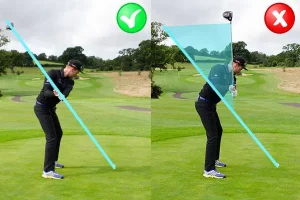
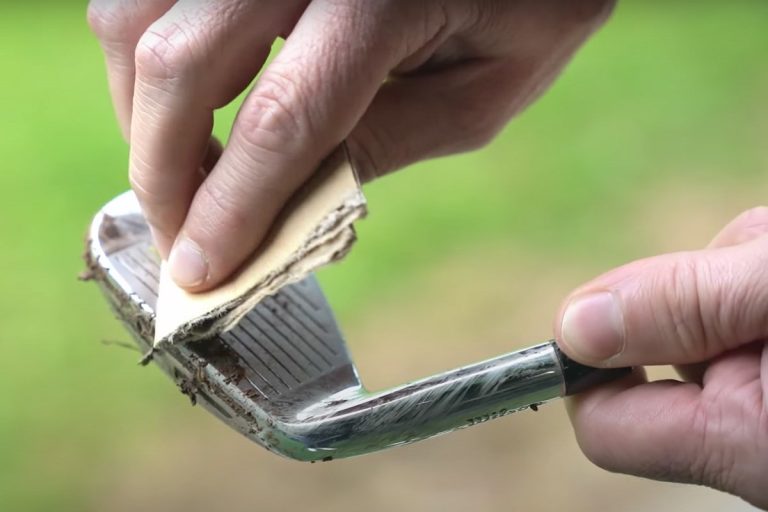
If you’re new to golf, you’re not alone if your swing feels a little off. The golf swing is tricky for everyone at first but with the right guidance, you’ll be hitting cleaner shots in no time.
This easy to follow guide is packed with practical golf swing tips for beginners. No confusing terms, no complicated instructions, just clear advice you can start using today to swing better and have more fun on the course.
Is it Necessary to Have a Good Golf Swing?
A good golf swing isn’t just about looking like a pro on the course, it’s the foundation of your entire game. For beginners, mastering the basics of a proper golf swing can mean the difference between frustrating shots and consistent improvement. A controlled, balanced swing helps you hit the ball straighter, farther, and with more accuracy, even if you don’t have a fast swing speed. Plus, developing good swing habits early on prevents bad techniques from becoming hard to break habits later. Whether you’re using a driver off the tee or a short iron around the green, a solid golf swing gives you the confidence to play better and enjoy the game more.
Your swing is the foundation of your entire golf game. A consistent, well-balanced swing helps you:
- Hit straighter shots
- Gain more distance
- Avoid frustration on the course
- Build confidence with every round
Improving your golf swing isn’t about power, it’s about technique and practice.
Steps to Improve Your Golf Swing:
Here are the steps any beginner can follow to improve their golf swing.
Step 1: Start with the Perfect Golf Grip
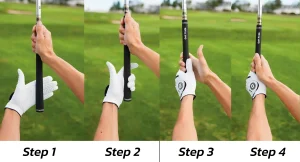
Your golf grip is the first thing that connects you to the club and it sets the tone for your entire swing. Many beginners overlook this step, but a proper golf grip can instantly improve your control, accuracy, and swing consistency.
There are three main types of grips to consider:
1. The Overlapping Grip (Vardon Grip)
This is the most common grip used by golfers of all levels. It’s comfortable and great for players with larger hands. Your pinky finger on the trailing hand (right hand for right-handed golfers) rests over the index finger of your lead hand.

2. The Interlocking Grip
Ideal for golfers with smaller hands or weaker grips. Your hands literally “lock” together, giving you a secure hold on the club. Famous golfers like Tiger Woods use this grip.
3. The 10-Finger (Baseball) Grip
This grip feels most natural for beginners because all ten fingers are on the club. It provides more leverage and power, but sometimes less control.
How to know if Your Grip is Correct:
A good way to check your golf grip is to look at the “V” shapes formed between your thumb and forefinger, they should point towards your trailing shoulder (right shoulder for right-handed golfers and left shoulder for left-handed golfers).
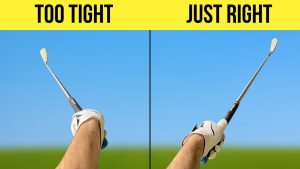
Your grip should feel firm but not tense, think of holding a tube of toothpaste without squeezing any out. If your hands feel tight or stiff, loosen up. For new golfers, practicing in front of a mirror is also a great way to check your hand placement and build confidence before hitting the course.
Step 2: Focus on Your Stance and Posture
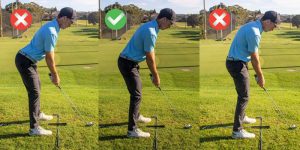
Your golf stance is like the foundation of a house, if it’s unstable, everything else falls apart. A good stance sets you up for balance, power, and control.
Start by standing shoulder width apart, with your weight balanced evenly on the balls of your feet, not your heels or toes. Keep your knees slightly flexed (but relaxed), almost like you’re ready to catch a ball.
Next, hinge forward slightly from your hips, not your waist, while keeping your back straight and chest up. This will help you maintain good posture without feeling stiff or hunched over.
Finally, check your distance from the ball. If you feel cramped or like you’re reaching too far, adjust your foot position until your arms can hang naturally.
A common beginner mistake is standing too upright or leaning too far over the ball. You want to feel athletic and comfortable rather than, robotic. Getting your stance and posture right might feel awkward at first, but it’s the secret to building a consistent and powerful swing.
Step 3: Learn the Basics of Swing Tempo
One of the biggest mistakes beginner golfers make is swinging too fast, trying to smash the ball with maximum power. But the truth is, a smooth, controlled swing almost always beats a fast, aggressive one.
Think of swing tempo as the pace at which you move from the start of your swing (backswing) to the finish (follow-through). The goal is to have a smooth, natural flow, not jerky or rushed movements. Your golf swing is all about rhythm and timing.
What’s the Ideal Tempo for Beginners?
Many coaches recommend a 3:1 tempo ratio, meaning your backswing should take about three times longer than your downswing. Slow back, smooth through. This helps create effortless power and better contact with the ball.
A simple drill you can use as a beginner is, counting “One…Two…Swing” in your head. Take your time going back (one…two), then swing through naturally. This prevents you from rushing and helps build muscle memory for consistent swings.
Pro Tip: Watch professional golfers play. Notice how their swings look relaxed and unhurried, even when they hit the ball a long distance. It’s not about swinging hard, it’s about swinging smart.
As a beginner, mastering your tempo will not only help you hit the ball straighter but also build confidence with every shot.
Step 4: Work on Rotation and Weight Transfer
A good golf swing isn’t just about your arms, it’s a full-body movement. If you want solid, consistent shots, learning to rotate your body properly and shift your weight is a must.
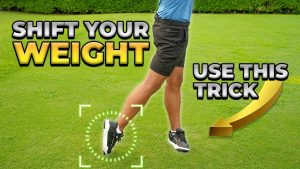
Many beginners make the mistake of swinging only with their arms, this often leads to weak shots, slices, or topped balls. The power in your swing comes from your body, specifically, from rotating your hips and shoulders while transferring your weight smoothly from your back foot to your front foot.
The Right Way to Rotate and Shift Weight
When you take your backswing, let your shoulders turn away from the target while keeping your lower body stable. Your weight should naturally shift to the inside of your back foot (right foot for right-handed players).
On your downswing, rotate your hips toward the target first, not your arms. This motion creates the coil and uncoil effect that generates power. As you swing through, your weight should move to your front foot (left foot for right-handers).
A Simple Drill for Rotation and Weight Shift
Try the “Step-Through Drill”. Take your normal backswing, and as you swing through, actually step your back foot forward toward the target. This forces your weight to transfer and helps you feel the proper motion of turning through the ball.
Why This Matters for Beginners:
Mastering rotation and weight transfer will help you:
- Hit the ball farther with less effort
- Stay balanced throughout your swing
- Prevent common beginner mistakes like topping the ball or slicing
Step 5: Practice a Smooth Follow Through
A follow-through is the continuation of your golf swing after you hit the ball, where you allow your body and club to finish smoothly in a balanced, controlled position.
Your follow-through isn’t just for show, it’s the final piece of a well-executed golf swing. A balanced and controlled follow-through shows that everything before it, i.e. your grip, stance, rotation, and tempo, worked in sync.
For beginner golfers, a good follow-through means your weight should finish on your front foot, your hips should face the target, and your hands should finish high and relaxed. If you find yourself off-balance or twisting awkwardly, it’s a sign that your swing mechanics need adjusting.
Step 6: Practice Beginner Friendly Swing Drills
Practicing the right golf swing drills can fast-track your progress, especially as a beginner learning the basics of a consistent golf swing. The goal isn’t to hit perfect shots right away, it’s to build muscle memory and good habits.
Here are a few easy drills to practice your swing:
1. Towel Under Arms Drill
This is a simple but powerful exercise to help you improve swing connection. Place a towel under both your armpits and try to keep it there while swinging. This keeps your arms connected to your body during the swing and forces your body to rotate together, helping you avoid relying on just your arms and promoting a more controlled, powerful swing.
2. Slow Motion Practice Swings
Slow motion practice swings help beginners focus on their mechanics without rushing. By deliberately slowing down your backswing and downswing, you can feel each movement and refine your technique. This drill helps you develop better control, timing, and muscle memory for a smoother, more consistent golf swing.
3. Tee Height Drill
This helps beginners ensure they’re teeing the ball at the right height for optimal contact. Set the tee so that the top of the ball is levelled with the center of your clubface when the club is resting behind it. This encourages proper ball striking and promotes solid contact, resulting in straighter and more consistent shots. Adjusting your tee height based on the club you’re using can also help with better launch angles and increased distance.

Common Golf Swing Mistakes Beginners Make
Here are a few mistakes most beginners make when they start their golf journey.
1. Grip Too Tight
Many beginners grip the club too tightly, thinking it will give them more control. However, a tight grip causes tension in the hands and arms, which reduces swing fluidity and power. A firm grip is important, but it should feel relaxed, as though you’re holding a tube of toothpaste without squeezing it.
2. Over Swinging
Trying to hit the ball as hard as possible is a common mistake. Over-swinging often leads to poor contact, a loss of balance, and a lack of control. Instead of focusing on power, focus on smooth and controlled movement. A balanced swing is much more effective than a fast, aggressive one.
3. Incorrect Alignment
Many beginners aim too far left or right of the target, leading to off-center hits and missed shots. To correct this, ensure your feet, hips, and shoulders are all aligned parallel to the target line. You can use alignment sticks or a club on the ground to practice and build this habit.
4. Swaying During the Swing
Swaying or shifting your weight too much side to side, reduces stability and accuracy in your shots. Instead of swaying, focus on rotating your body around a steady base. This allows for a more consistent and balanced swing, where your weight naturally shifts from your back foot to your front foot during the downswing.
5. Not Following Through
Many beginners stop their swing too early, not allowing the follow-through to complete naturally. A full follow-through ensures you’re using your whole body to generate power and helps maintain control. Remember, the follow-through should be smooth and balanced, with your weight transferred onto your front foot.
Concluding
Improving your golf swing as a beginner is all about consistency, practice, and focusing on the fundamentals. From mastering your grip to working on your swing tempo, every little detail adds up to better performance on the course.
Remember, it’s not about making perfect shots every time, it’s about building good habits and enjoying the process. So, take it slow, practice regularly, and be patient with yourself. Golf is a game that rewards persistence, and with these simple tips and drills, you’ll be hitting better shots in no time. Grab your clubs, get on the course, and start swinging with confidence.