
A demanding round of golf can leave your back feeling stiff, particularly when long hours of sitting are followed by repeated swings and hours on the course. Making time for Golf stretching can help prepare your muscles for movement, improve mobility and make your pre-round routine more effective. Whether you are a weekend golfer or …

A demanding round of golf can leave your back feeling stiff, particularly when long hours of sitting are followed by repeated swings and hours on the course. Making time for Golf stretching can help prepare your muscles for movement, improve mobility and make your pre-round routine more effective.
Whether you are a weekend golfer or play regularly, simple exercises for your back, hips and shoulders can become a valuable part of your preparation. Explore practical stretches and at-home exercises to support comfortable movement and help you enjoy your time on the course.
Is Your Back Feeling the Strain of Golf?
Golf involves plenty of movement, even when it does not always feel like a physically demanding sport. Between repeated swings, bending to pick up your ball, walking the course and spending time in one position, your back can experience considerable strain. If you spend most of the week sitting at a desk, moving straight into a full round may feel particularly uncomfortable.
Back stiffness can affect more than your comfort. It may make turning through your swing difficult, restrict your movement and leave you feeling tired before you reach the final holes. Rather than waiting until discomfort becomes a regular problem, it is worth making mobility work part of your golf routine.
Alongside improving your mobility, paying attention to your body position and movement can help you develop a more controlled swing. Read our guide to improving your golf swing technique for practical advice on posture, rotation and balance
A consistent Golf stretching routine can help you prepare your muscles for movement, maintain flexibility and improve how comfortably you move through your swing. Although gentle exercise cannot address every cause of back discomfort, it can support your general mobility and physical wellbeing.
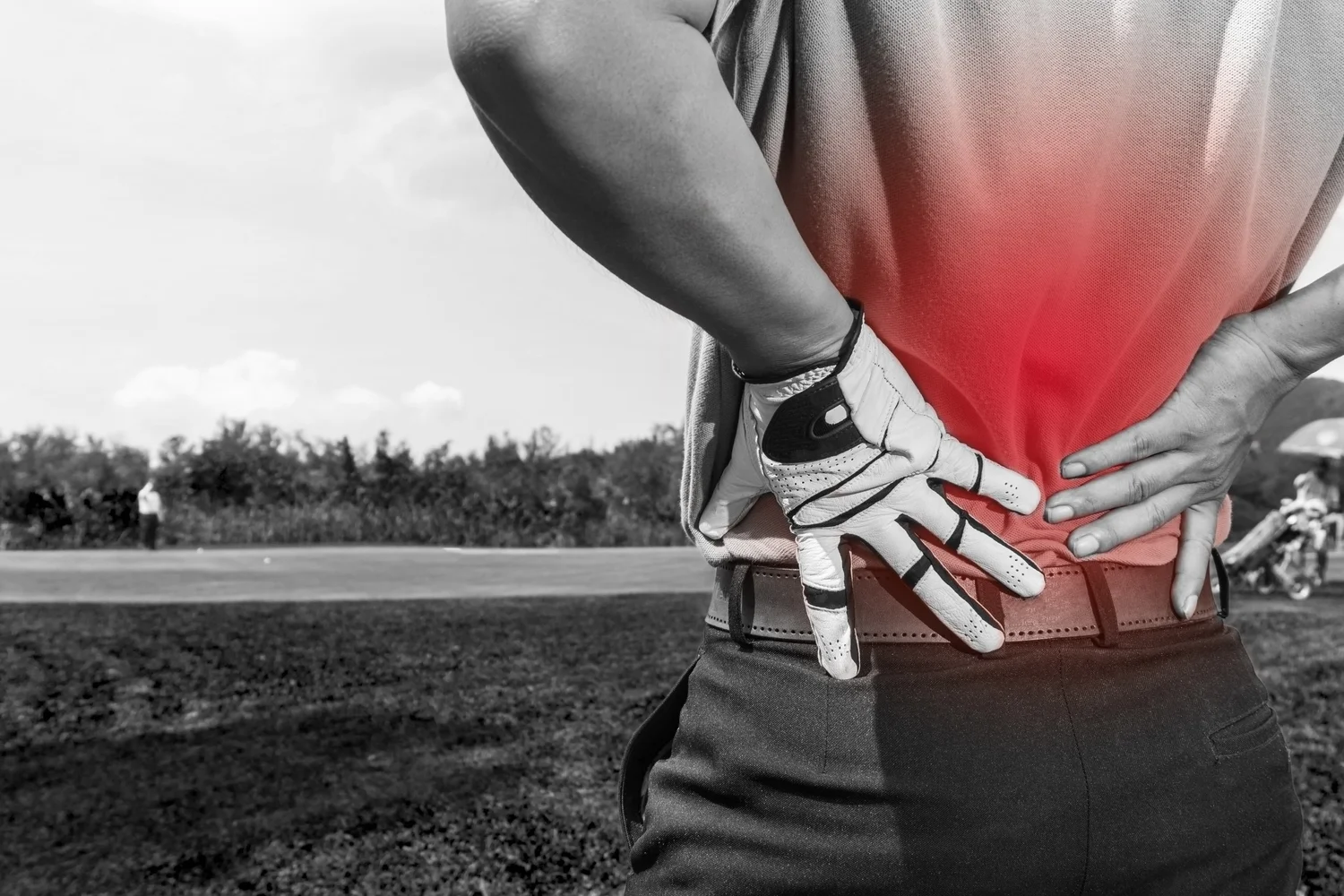
How Golf Places Demands on Your Back
A golf swing requires a combination of rotation, balance and coordination. Your hips, shoulders and upper body need to work together, while your lower back helps support your posture throughout the movement. Repeating these actions without preparing your body can contribute to stiffness and discomfort, particularly when your mobility is limited.
Spending long periods sitting down can also make it harder to move freely when you arrive at the course. Add repeated swings and bending to the mix, and your body may struggle to cope with the demands of a full round.
The effects can build up in several ways:
- Reduced mobility: Tight muscles can make it uncomfortable to turn through your swing.
- Changes in technique: Restricted movement may encourage you to compensate with other parts of your body.
- Muscular discomfort: Repeated movements can leave your back feeling tired or sore.
- Reduced enjoyment: Discomfort can make it harder to concentrate and enjoy your time on the course.
That is why preparing your body before playing is worth taking seriously. Golf stretching and gentle warm-up exercises can help you move more comfortably before making full swings. They should be part of a wider approach that includes suitable technique, strength work and recovery.
Regular discomfort should not simply be ignored. Back pain can have different causes, and stretching is not suitable for every condition. Seek advice from a healthcare professional or qualified physiotherapist if your symptoms persist, become worse or interfere with everyday activities.

Simple Golf Stretches to Prepare Your Body
You do not need an elaborate fitness programme to prepare for a round of golf. A simple Golf stretching routine can help prepare the areas of your body that move during a swing. The following exercises are easy to include before heading to the first tee and can be completed without specialist equipment.
Try these golf warm-up stretches:
Torso rotations: Stand comfortably with your arms crossed over your chest. Rotate your torso gently in both directions, keeping the movement smooth and within your natural range. This helps prepare your torso for the turning movement involved in a golf swing.
Hip Flexor Stretch: Kneel on one knee with your other foot placed flat in front of you, creating a comfortable lunge position.
Hamstring Stretch: Extend one leg forwards and rest your heel on the ground with your toes raised. Keep your back neutral and lean forwards slightly from the hips until you notice a mild stretch behind your thigh. Repeat on the other side.
Shoulder circles: Stand tall and make slow circles with both shoulders, moving forwards and then backwards. Keep the motion relaxed to prepare your shoulders for the arm movement involved in your swing.
Move gradually and breathe normally throughout each exercise. Keep every movement gentle and controlled, stopping immediately if you experience sharp or increasing discomfort. These movements should help you feel prepared for activity rather than leave your muscles uncomfortable.
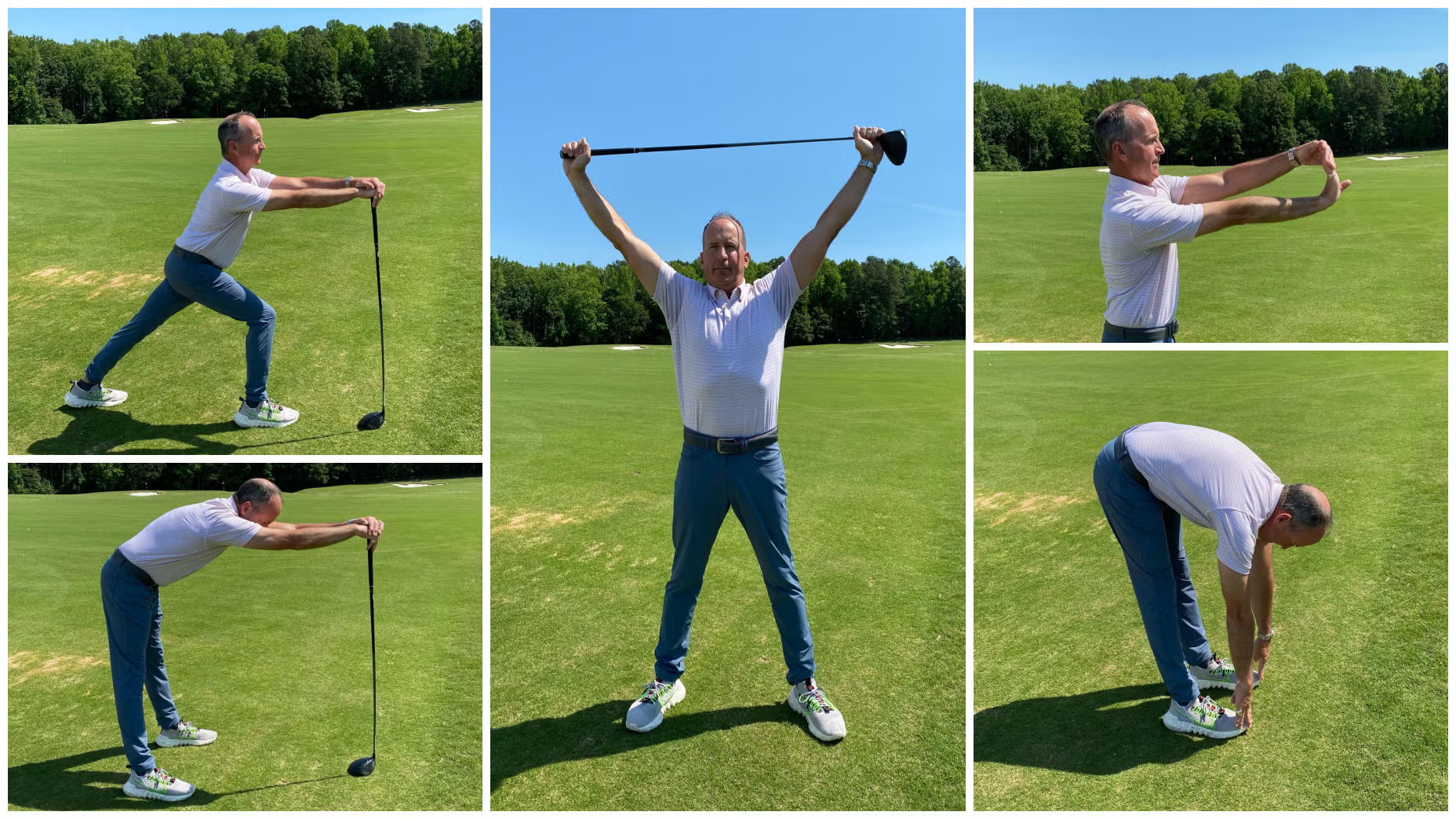
Why mobility equals distance (and swagger)
Having enough mobility to turn comfortably through regular golf stretching can make a difference to how you approach a golf swing. When your hips, shoulders and upper body move freely, it may be easier to reach a comfortable backswing position and complete the movement without unnecessary strain.
However, greater flexibility does not automatically mean longer shots. Distance also depends on factors such as technique, strength, timing and how efficiently you transfer energy through the swing.
Understanding how far each club can travel can also help you assess your progress, so take a look at our guide to understanding golf club distances for a breakdown of typical distances across different clubs.
This is where golf flexibility drills can support your overall performance. Improving your range of movement may help you maintain a comfortable posture, turn with better control and avoid forcing positions that do not suit your body.
Think of mobility as one part of your golf preparation rather than a shortcut to extra distance. Combining regular stretching with appropriate strength exercises and good swing technique can help you develop a more balanced approach to your game.
Simple exercises you can do at home
You do not need a gym membership or a complicated training plan to work on your mobility. A few exercises at home can help you develop strength, control and a greater awareness of how your body moves.
Try adding these exercises to your routine:
Cat-cow stretch: Position yourself on all fours, with your hands beneath your shoulders and knees aligned under your hips. Slowly round your spine towards the ceiling, then gently move in the opposite direction while lifting your chest. Keep the movement controlled and avoid forcing your lower back.
Plank holds: Position yourself on your forearms and toes, keeping your body in a straight line. Engage your abdominal muscles and hold the position for a manageable period without allowing your hips to drop. Planks help develop core stability, which supports your body during movement.
Glute bridges: Lie on your back with your knees bent and feet flat on the floor. Tighten your abdominal muscles and gently lift your hips until your body forms a comfortable line from your shoulders to your knees. Lower slowly and repeat. This exercise strengthens the gluteal muscles, which help support hip movement.
Wall angels: Stand with your back against a wall and your arms bent into a goalpost position. Slowly slide your arms upwards and downwards while maintaining a comfortable posture. This movement encourages shoulder mobility and upper-body control.
Start with a small number of repetitions and increase gradually as the exercises become more familiar. These movements are not a substitute for professional assessment if you have an existing back condition, but they can form part of a general fitness routine.
Gear that helps (because excuses don’t)
You can complete many useful golf stretching exercises using your body weight alone. However, a few simple accessories may make certain movements easier to practise and help you maintain a regular routine.
Consider adding the following to your golf fitness equipment:
- Resistance bands: Lightweight and easy to carry, these can be used for gentle shoulder mobility exercises, controlled rotations and suitable strength work.
- Foam roller: A foam roller can be used on larger muscle groups, such as the upper back and glutes, to help relieve the feeling of muscular tightness. Avoid rolling directly over your spine or painful areas.
- Massage ball: A small massage ball can help you apply gentle pressure to tight muscles around the shoulders, glutes and hips. Use it carefully and avoid pressing directly on bones or the spine.
These accessories are useful additions rather than essentials. You do not need to purchase expensive equipment to improve your mobility. Focus on learning the movements correctly and choosing tools that genuinely support your routine.
Why confidence lives in your spine
Feeling comfortable in your body can influence how confidently you approach a round of golf. When your back feels stiff or your movement is restricted, you may become hesitant during your swing or start changing your technique to avoid discomfort.
A regular mobility routine can help you become more familiar with your body’s movement and identify areas that need attention. This awareness may make it easier to prepare for a round, maintain a comfortable posture and approach each shot without unnecessary tension.
Confidence is also influenced by your technique, experience and preparation. Stretching alone will not solve every physical problem, but taking care of your mobility and overall fitness can contribute to a more positive experience on the course.
Remember that feeling comfortable is more important than forcing a particular swing position. Work within your natural range of movement and make adjustments that suit your body.
Build habits that keep you out of the Advil aisle
Doing a few stretches once before a round is unlikely to make a lasting difference to your overall fitness. The real value comes from developing a routine that you can maintain throughout the week.
Try building these habits into your schedule:
- Warm up before playing: Spend a few minutes on gentle movements before taking full swings or starting your round.
- Make time for mobility: Set aside a short session on non-golf days to work on your flexibility and comfortable range of movement.
- Keep a resistance band in your bag: Having a simple accessory available can make it easier to include suitable mobility exercises in your practice routine.
- Monitor how your body feels: Notice which movements feel comfortable and whether particular activities regularly cause discomfort. Adjust your routine when needed and seek professional advice for persistent symptoms.
Consistency is more useful than attempting an intense routine every now and again. A manageable schedule can help you stay engaged with your fitness and make it easier to prepare for regular rounds.

Conclusion: Stretch Now or Pay Later
A Golf stretching routine for back pain can be a useful part of preparing for the course and maintaining comfortable movement. From gentle torso rotations and hip flexor stretches to simple strength exercises at home, there are several ways to support your body without investing in expensive equipment.
The key is to make these activities part of your regular routine rather than treating them as a last-minute fix. Combine gentle stretching with appropriate exercise, good swing technique and enough recovery between rounds.
Most importantly, do not ignore persistent or worsening back pain. Stretching is not a cure for every cause of discomfort, and getting the right professional advice can help you understand what your body needs.
Look after your mobility, practise within your limits and give your body time to adapt. A comfortable, well-prepared golfer is in a much better position to enjoy the game from the first tee to the final green.