
If you are new to golf, getting to grips with your swing can take time. You might find that your shots lack direction, your contact is inconsistent or your swing feels uncomfortable. These are common challenges when learning the game, but the right guidance and regular practice can help you make steady progress. This beginner-friendly …
If you are new to golf, getting to grips with your swing can take time. You might find that your shots lack direction, your contact is inconsistent or your swing feels uncomfortable. These are common challenges when learning the game, but the right guidance and regular practice can help you make steady progress.
This beginner-friendly guide covers practical golf swing tips to help you develop better technique. From finding a comfortable grip to improving your balance and timing, each step introduces a skill you can work on during your practice sessions. You do not need complicated techniques to get started. Building a reliable foundation is the first step towards playing with greater control and confidence.
Is it Necessary to Have a Good Golf Swing?
A reliable golf swing plays an important role in how you perform on the course. It is not simply about making your shots look impressive; good technique helps you control the club, make cleaner contact and improve the consistency of your ball striking.
For beginners, learning the basic movements early can make a noticeable difference. A balanced swing gives you a better chance of directing the ball towards your intended target, while sound technique can help you generate distance without relying on excessive force. It also reduces the likelihood of developing habits that may become difficult to correct later.
Whether you are using a driver from the tee or an iron for an approach shot, having a repeatable golf swing gives you a useful starting point.
A consistent and balanced swing can help you:
- Develop better control over where your ball travels and aim for more consistent results.
- Generate more distance through efficient movement.
- Maintain better balance throughout your swing.
- Feel more confident when using different clubs.
- Develop sound habits as your game progresses.
A better golf swing comes from sound technique and controlled movement rather than relying on extra force. It is about understanding the fundamentals, making controlled movements and practising them regularly.
Steps to Improve Your Golf Swing:
The following steps cover the essential areas beginners should focus on when developing their golf swing. Work through them at a comfortable pace rather than trying to change everything at once.
Step 1: Start with the Perfect Golf Grip
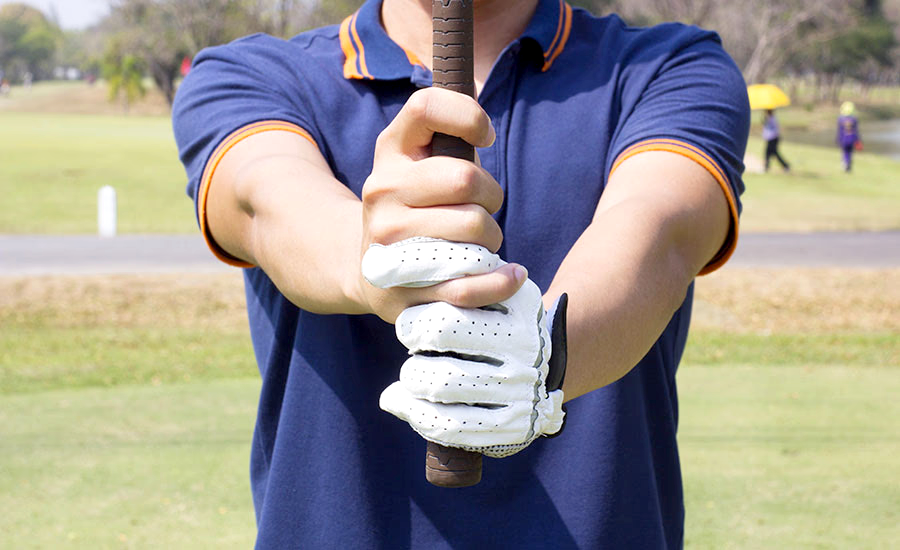
Your grip is your main point of contact with the club, making correct hand placement important for controlling your swing. A suitable grip helps you control the clubface and maintain a comfortable hold throughout the shot.
There are three common grip styles beginners can try:
The Overlapping Grip (Vardon Grip)
This is widely used by golfers at different skill levels. The little finger of your trailing hand rests over the index finger of your lead hand. It can feel comfortable for players with larger hands and helps both hands work together during the swing.
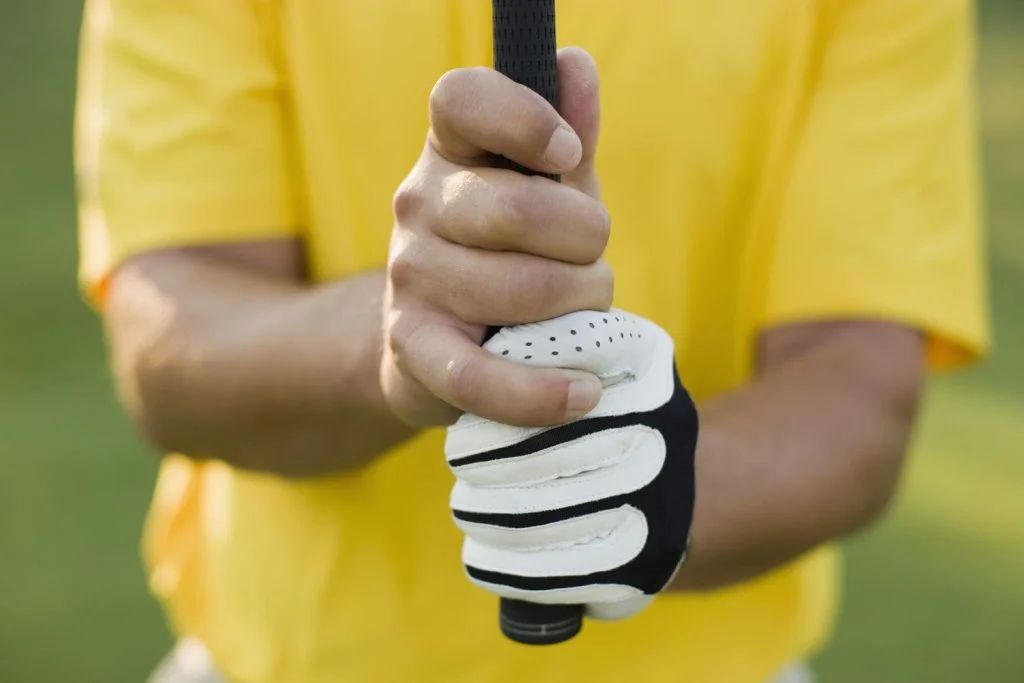
The Interlocking Grip
With this grip, the little finger of your trailing hand hooks around the index finger of your lead hand. It creates a connected hold and may suit golfers with smaller hands or those who prefer their hands to feel more secure on the club. Tiger Woods is a well-known golfer who uses this style.
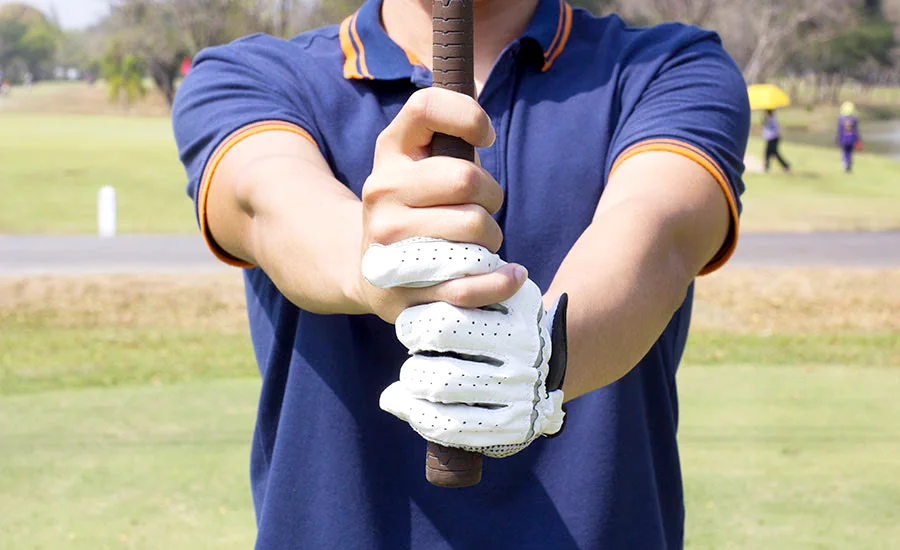
The 10-Finger (Baseball) Grip
All ten fingers rest directly on the handle, much like holding a baseball bat. Its straightforward hand position can feel natural to beginners, particularly those who are still getting used to holding a golf club.

How to know if Your Grip is Correct:
One way to check your hand position is to look at the V-shaped lines formed by your thumbs and index fingers. For a neutral grip, these should generally point towards your trailing shoulder. The exact position can vary depending on your hand placement and the type of grip you use.
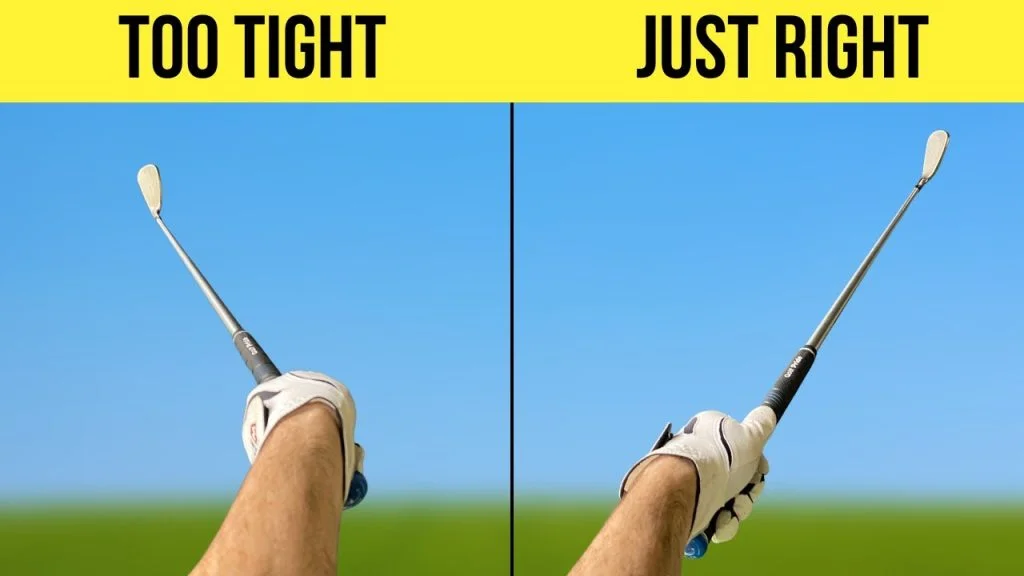
Your hold should be secure without creating unnecessary tension. Imagine holding a tube of toothpaste without squeezing it too firmly. If your fingers, wrists or forearms feel tight, relax your hands slightly.
Beginners can also practise their grip in front of a mirror. This makes it easier to check hand placement and become familiar with the position before moving on to full swings.

Step 2: Focus on Your Stance and Posture
Your stance provides the base for your golf swing. If your body position is uncomfortable or unbalanced before you start, it can become harder to control the movements that follow.
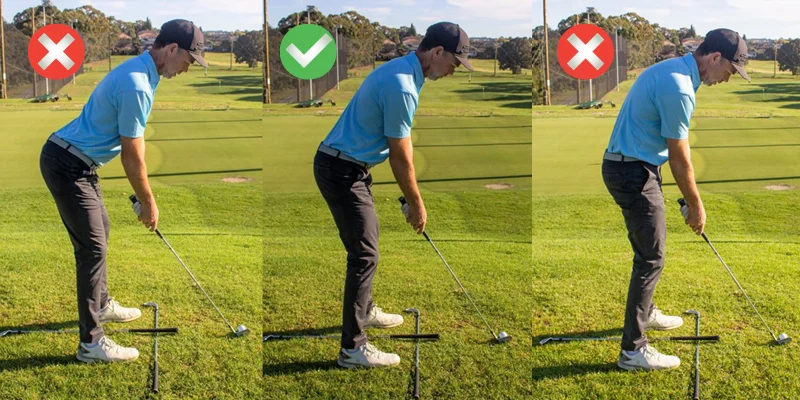
Begin by placing your feet approximately shoulder-width apart. Distribute your weight evenly across your feet, keeping it around the middle rather than leaning heavily towards your heels or toes. Allow your knees to bend slightly so that your legs remain relaxed and ready to move.
Next, tilt forwards from your hips while keeping your back relatively straight and your chest comfortably raised. Avoid rounding your shoulders or bending excessively from your waist. Your arms should hang naturally from your shoulders, allowing you to hold the club without feeling cramped.
Make sure you are standing at a comfortable distance from the ball before starting your swing. Standing too close can restrict your arm movement, while positioning yourself too far away may encourage you to reach for the ball.
A common beginner mistake is adopting a stance that feels too rigid or standing too upright. Aim for a relaxed, athletic position that allows you to turn comfortably. It may take a few practice sessions to find a setup that suits your height, build and club selection, but getting comfortable with your posture is an important part of developing a repeatable golf swing.
Step 3: Learn the Basics of Swing Tempo
One of the most common problems for beginner golfers is rushing the swing in an attempt to generate extra distance. Applying more force does not automatically produce better results. In many cases, an uncontrolled movement makes it harder to strike the ball cleanly.
Swing tempo refers to the overall pace and rhythm of your movement, from the start of the backswing through to the finish. A controlled sequence helps you maintain balance and coordinate your body and arms throughout the shot.

What’s the Ideal Tempo for Beginners?
There is no single tempo that works for every golfer, but a commonly taught guideline is a backswing that takes roughly three times as long as the downswing. This is often described as a 3:1 ratio. It gives beginners a useful reference point for avoiding a rushed takeaway and maintaining a smooth transition.
You can try a simple counting exercise during practice. Count slowly as you take the club back, then allow it to move naturally through the ball. The aim is not to force a particular speed but to develop a rhythm that feels controlled and repeatable.
Pro Tip: Watch how experienced golfers prepare and move through their swings. Pay attention to the smooth transition from backswing to downswing rather than focusing only on how far they hit the ball. Their timing and balance can offer useful examples to follow.
As you become more familiar with your tempo, you may find it easier to make consistent contact and control the direction of your shots.
Step 4: Work on Rotation and Weight Transfer
A golf swing involves more than moving your arms. Your shoulders, hips, legs and upper body all contribute to the movement. Learning how these parts work together can help you produce a more balanced and controlled action.
Beginners sometimes rely too heavily on their arms, which can make the swing feel disconnected. This may lead to inconsistent contact, a loss of balance or shots that do not travel as intended. Developing a comfortable body turn and allowing your weight to shift naturally can help improve coordination.
Understanding how far each club can travel is another important part of improving your decisions on the course. Our guide to golf club distances explains what beginners can expect from different clubs.
The Right Way to Rotate and Shift Weight
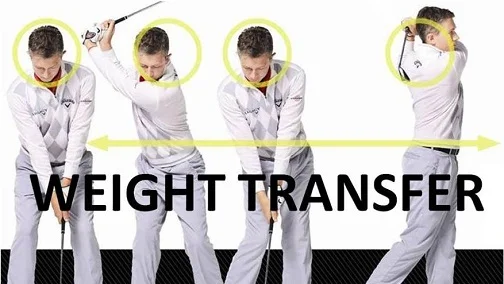
During the backswing, turn your shoulders away from the target while allowing your hips to rotate naturally. For a right-handed golfer, some of your weight will move towards the inside of your right foot. Try to maintain your balance rather than leaning or moving excessively to one side.
As you begin the downswing, let your lower body start turning towards the target. Your arms and club then follow through the movement. For a right-handed player, the weight should gradually move towards the left foot as the club travels through the ball.
The aim is to create a coordinated movement rather than deliberately forcing your weight from one foot to the other.
A Simple Drill for Rotation and Weight Shift
Try the Step-Through Drill to become more familiar with this movement. Begin with your normal stance and make a controlled backswing. As you swing through, allow your back foot to step forwards towards the target.
Start slowly without worrying about hitting the ball hard. This exercise can help you recognise how your body moves through the shot and encourage a balanced finish.
Why This Matters for Beginners:
Developing better rotation and weight transfer can help you:
- Generate clubhead speed through coordinated movement.
- Maintain a more stable position throughout the swing.
- Improve balance as you move towards the target.
- Reduce excessive sideways movement.
- Make your ball striking more consistent.
Step 5: Practice a Smooth Follow Through
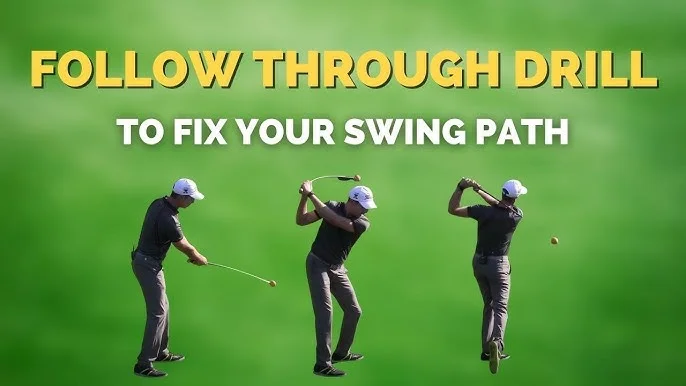
The follow-through is the part of your golf swing that takes place after the club makes contact with the ball. It shows how your body and club continue moving towards the finish of the shot.
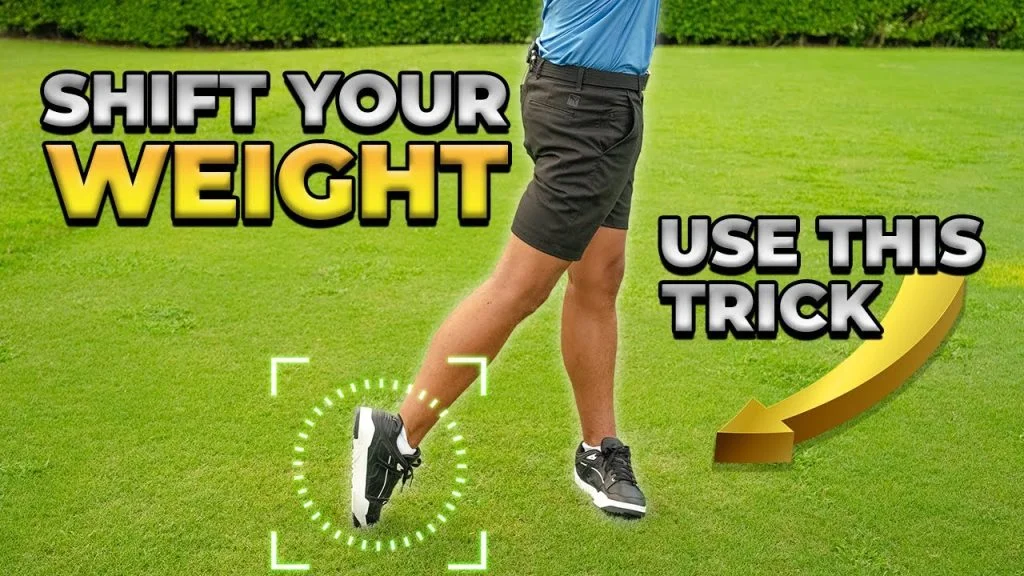
A controlled finish is a useful sign that your movement has remained balanced. Rather than stopping suddenly after impact, allow the club to travel naturally as your body turns towards the target.
For beginners, a balanced finish usually involves having most of your weight on your front foot, your chest and hips facing towards the target, and the club finishing comfortably around your upper body. Your back foot should be able to lift naturally as your weight moves forwards.
If you regularly lose your balance, fall backwards or struggle to finish the movement, it may be worth checking your stance, tempo and weight transfer.
Practise holding your finishing position for a few seconds after each shot. This simple habit encourages better awareness of your balance and helps you recognise when your swing feels controlled.
Step 6: Practice Beginner Friendly Swing Drills
Regular practice is essential when learning the basics of a golf swing. However, simply hitting ball after ball does not always help you identify what needs improving. Targeted exercises allow you to work on individual movements without feeling pressured to produce perfect shots.
Your equipment can also influence your practice sessions, so take a look at our guide to choosing the right golf ball to understand what beginners should consider when selecting a ball.
The following drills are straightforward enough for beginners to include in their practice routine.
Towel Under Arms Drill
This exercise helps you understand how your arms and upper body work together during the swing. Place a small towel under each armpit and make gentle practice swings while trying to keep the towels in position.
The exercise encourages a connected movement and can help you avoid letting your arms move independently of your body. Begin with short, controlled swings before gradually increasing the range of movement.
Slow Motion Practice Swings
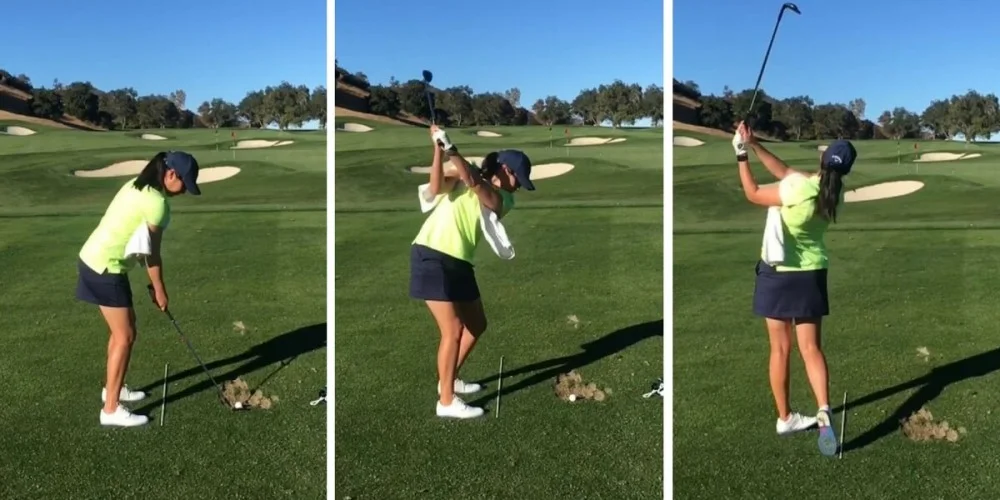
Making practice swings at a reduced speed gives you more time to notice how your body moves. Work through your grip, takeaway, backswing, transition and follow-through without rushing between positions.
Pay attention to your balance and the way your arms and body coordinate. Repeating the movement slowly can help you recognise areas that feel uncomfortable and build familiarity with a more controlled technique.

Tee Height Drill
The height of your tee can influence how you make contact with the ball, particularly when using a driver. Place a ball on a tee and adjust its height so that, when the club is resting behind it, the ball sits at an appropriate level relative to the clubface.

With many modern drivers, golfers use a setup where approximately half of the ball appears above the top edge of the clubhead. The ideal height can vary depending on your driver and swing, so experiment during practice to find a position that allows you to make comfortable contact.
Remember that tee height requirements differ between clubs. You generally need a higher tee for a driver than for an iron, so adjust it according to the club you are using.
Common Golf Swing Mistakes Beginners Make
Learning golf involves making adjustments along the way. Recognising common mistakes can help you understand why certain shots are inconsistent and what you can work on during your next practice session.
Here are five issues that beginners should watch out for.
Grip Too Tight
Gripping the club excessively tightly can cause unwanted stiffness in your hands and lower arms. This may restrict the natural movement of your wrists and make it harder to swing freely.
Keep your grip secure but relaxed. You should have enough control to hold the club throughout the swing without squeezing the handle unnecessarily. The toothpaste example is a useful reminder: hold firmly enough to maintain control without applying excessive pressure.
Over Swinging
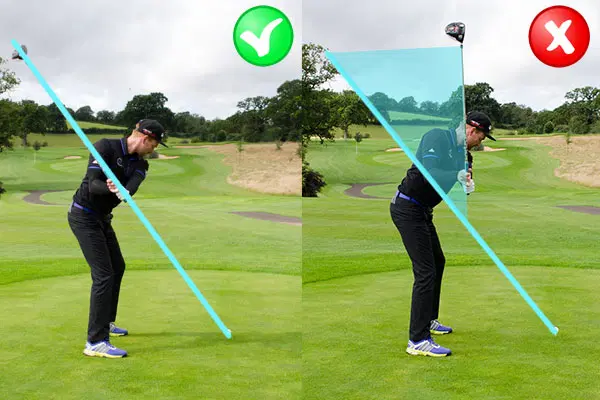
Trying to hit every shot as hard as possible can lead to poor timing and an unstable finish. When you swing beyond a comfortable range, it becomes more difficult to maintain control of the club and make consistent contact.
Instead, focus on a backswing that feels manageable and a smooth movement through the ball. Building a repeatable action is more useful than chasing extra distance on every shot.
Incorrect Alignment
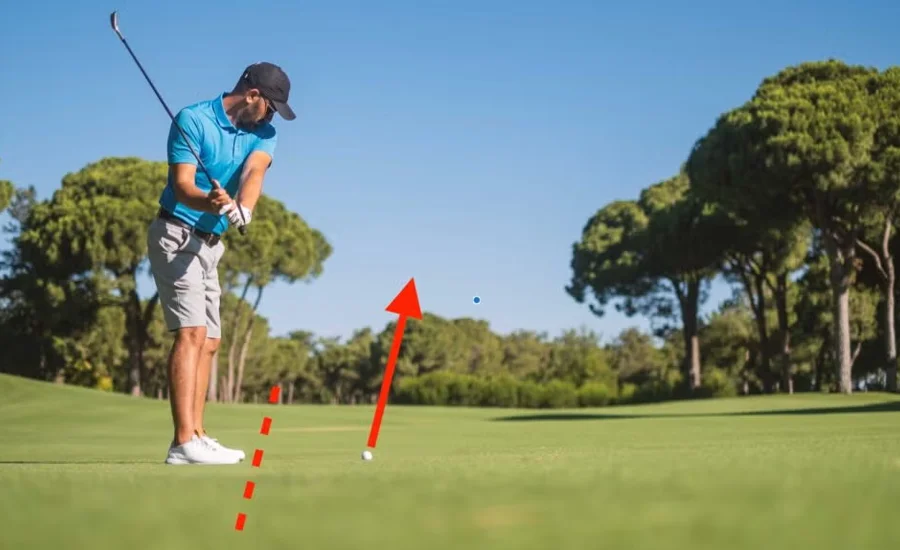
Even a well-executed swing can send the ball in the wrong direction if your body is not aligned correctly. Beginners often position their feet towards the target while their shoulders or hips point elsewhere.
Before taking your shot, check that your feet, hips and shoulders are generally parallel to your intended target line. An alignment stick or spare club placed on the ground can help you practise this position.
Swaying During the Swing
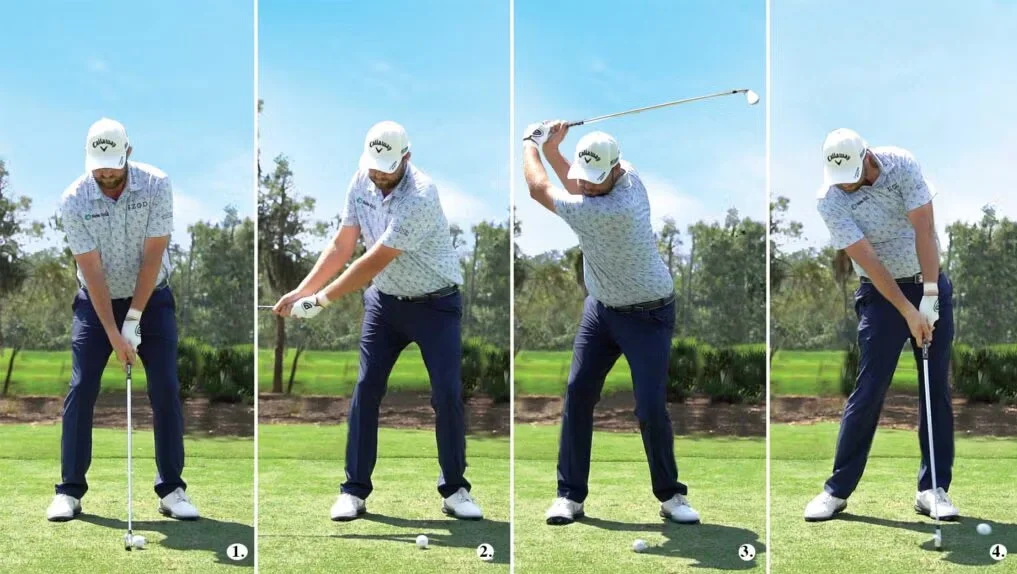
Excessive sideways movement can make it difficult to maintain balance and return the club to the ball consistently. This often happens when beginners try to shift their weight by moving their whole body rather than turning around a stable base.
Focus on rotating your body while keeping your posture under control. Your weight should move naturally during the swing, but avoid allowing your hips and upper body to slide too far from side to side.
Not Following Through
Some beginners slow down or stop their movement immediately after hitting the ball. This can interrupt the natural flow of the swing and make it harder to finish in a balanced position.
Allow your arms and body to continue moving after impact. Complete your swing with most of your weight on your front foot and your chest turned towards the target. Practising this position can help you become more aware of how your swing finishes.

Concluding
Improving your golf swing as a beginner takes patience, regular practice and a willingness to work on the basics. A comfortable grip, balanced stance, controlled tempo and coordinated body movement all contribute to a more reliable technique.
You do not need to master every part of your swing in one session. Choose one area to work on at a time, repeat the drills that help you understand the movement and pay attention to how your shots develop.
Most importantly, avoid becoming discouraged by occasional poor contact or wayward shots. Progress in golf is rarely a straight line, and small improvements can build into more consistent performances over time. Keep practising, stay relaxed and enjoy learning the game. With a sound foundation, you can approach each round with greater confidence and a clearer idea of what you want to achieve.